

Market Status and Development Trends
1. Current Market Landscape: Size, Segmentation, and Key Players
Market Segmentation by Application
- Commercial Buildings: Dominates the market, accounting for 55% of 2024 sales. Luxury offices, five-star hotels, and high-end retail complexes are the top buyers, as they prioritize brand image and ESG (Environmental, Social, Governance) compliance.
- Residential Buildings: Represents 30% of the market, with growth led by high-end villas and mid-rise premium complexes. Homeowners in Europe, North America, and East Asia are willing to pay a premium for solutions that avoid compromising their property’s visual appeal.
- Public Buildings: Accounts for 15% of sales, driven by government-led green renovation projects (e.g., museum restorations, hospital upgrades) and public-private partnerships (PPPs) for transportation hubs.
Key Market Players
- Traditional PV Manufacturers: Companies like JinkoSolar, Longi, and Canadian Solar have launched stone-like PV wall panel lines, leveraging their existing solar cell production capacity and global distribution networks.
- Building Materials Giants: Players like Saint-Gobain (France) and Mitsubishi Materials (Japan) have entered the space by integrating PV technology into their existing stone/cladding product portfolios, focusing on architectural design and material durability.
2. Core Drivers of Market Growth: Policy, Demand, and Technology
2.1 Policy Mandates for Net-Zero Buildings
- China: The “14th Five-Year Plan for BIPV Development” (2021–2025) mandates that 50% of new public buildings and 30% of new commercial buildings adopt BIPV by 2025. It also offers subsidies of up to 20% of project costs for BIPV installations that meet aesthetic standards.
- European Union: The Green Deal Industrial Plan (2023) classifies BIPV as a “strategic net-zero technology” and provides tax breaks for buildings using BIPV cladding. The EU’s Energy Performance of Buildings Directive (EPBD) 2023 update requires all new buildings to be “zero-emission” by 2030, making BIPV a near-mandatory solution.
- United States: The Inflation Reduction Act (IRA) 2022 offers a 30% tax credit for BIPV installations, with an additional 10% credit if the panels are manufactured in the U.S. This has spurred demand for aesthetic BIPV solutions in commercial and residential projects.
2.2 Shifting Architectural Demand: Aesthetics as a Non-Negotiable
- Brand-Driven Design for Commercial Clients: Corporations and luxury brands (e.g., high-end hotels, designer retail) view their buildings as “brand ambassadors.” A 2024 survey by the Council on Tall Buildings and Urban Habitat (CTBUH) found that 78% of CBD office developers prioritize “aesthetically integrated renewable solutions” over standalone solar panels.
- Homeowner Preference for “Invisible Green”: In residential markets like California, Japan, and Germany, surveys show that 65% of homeowners would reject rooftop solar if it altered their home’s curb appeal. Stone-like PV panels, by mimicking natural stone, eliminate this objection.
2.3 Technological Breakthroughs Lower Costs and Boost Performance
- Cell Technology: The shift to TOPCon (Tunnel Oxide Passivated Contact) and HJT (Heterojunction) solar cells has increased the panels’ conversion efficiency from 18–20% (2020) to 22–24% (2024). This means smaller facade areas can generate the same power, reducing material and installation costs.
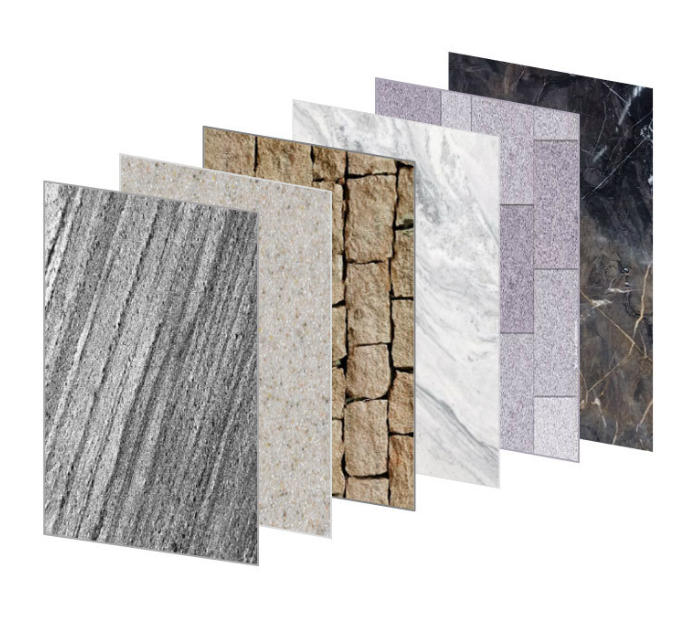
- Simulation Technology: 3D scanning and digital inkjet printing have improved the stone-like finish’s fidelity (now up to 95% match to natural stone) while cutting production time by 30%. Manufacturers can now offer custom stone textures in 2–3 weeks, down from 8–10 weeks in 2022.
- Material Innovation: The development of lightweight ceramic composite coatings (replacing heavier glass) has reduced panel weight by 25% (from 20 kg/㎡ to 15 kg/㎡), lowering structural load requirements and installation costs for older buildings.
3. Regional Market Prospects: Mature vs. Emerging Markets
3.1 Mature Markets: Europe, North America, and East Asia
- Europe: The largest regional market (40% of global sales in 2024), led by Germany, France, and Italy. Demand is driven by heritage building renovations (e.g., historic museums, castles) where stone-like PV panels are the only BIPV solution that meets strict preservation standards. The EU’s 2030 zero-emission building mandate will push annual growth to 32% through 2027.
- North America: The second-largest market (25% of global sales), with the U.S. leading. The IRA’s tax credits have spurred demand in commercial buildings (e.g., New York City CBD offices) and luxury residential projects (e.g., California villas). The U.S. market is expected to grow at 35% annually through 2028, as domestic manufacturing of panels ramps up.
- East Asia (China, Japan, South Korea): Accounts for 25% of global sales. China is the largest single-country market (18% of global sales) due to its BIPV subsidies and massive new construction activity. Japan’s demand is driven by aging building renovations and a focus on “energy self-sufficiency” post-Fukushima. South Korea’s Green New Deal (2021) has allocated $5 billion to BIPV projects, with stone-like panels prioritized for public buildings.
3.2 Emerging Markets: Southeast Asia, Middle East, and Latin America
- Southeast Asia: Rapid urbanization (e.g., Jakarta, Bangkok, Manila) is driving demand for commercial and residential buildings. Countries like Vietnam and Thailand have introduced BIPV subsidies (15–20% of project costs) to reduce reliance on coal. The stone-like panels’ durability (resistant to high humidity and typhoons) makes them ideal for the region, with annual growth expected to hit 40% through 2030.
- Middle East: Luxury tourism (e.g., Dubai, Abu Dhabi) and net-zero goals (the UAE’s 2050 Net Zero Strategy) are driving demand for high-end hotels and resorts. Stone-like PV panels’ resistance to extreme heat (up to 60°C) and sandstorms align with the region’s climate, while their aesthetic appeal matches the luxury projects’ design standards.
- Latin America: Brazil and Mexico are the key markets, with growth led by commercial buildings in São Paulo and Mexico City. The region’s abundant sunlight (higher irradiance than Europe) boosts panel efficiency, making the technology’s TCO more competitive. Governments are starting to offer BIPV incentives (e.g., Brazil’s Programa de Incentivo à Energia Renovável), which will accelerate adoption.
4. Potential Challenges and Mitigation Strategies
| Challenge | Description | Mitigation Strategy |
|---|---|---|
| High Upfront Costs | Stone-like PV panels cost 20–30% more upfront than traditional stone cladding, deterring price-sensitive buyers. | 1. Expand green financing options (e.g., BIPV-specific loans with 0% interest for 5 years). 2. Promote power purchase agreements (PPAs) for commercial buildings, where third parties own and maintain the panels, and buyers pay for electricity at a discount. |
| Lack of Uniform Standards | No global certification standard for stone-like PV panels’ aesthetic durability (e.g., color fading, texture wear), leading to buyer uncertainty. | 1. Industry associations (e.g., IEC, ASTM) to develop unified testing standards (e.g., 10,000 hours of UV exposure testing for color retention). 2. Manufacturers to offer 15-year “aesthetic warranties” (in addition to 25-year power warranties) to build trust. |
| Limited Awareness | Many architects, developers, and homeowners are unaware of the technology’s existence or benefits. | 1. Partner with architectural firms (e.g., Gensler, Zaha Hadid Architects) to showcase the panels in flagship projects. 2. Launch industry campaigns (e.g., “Green Facades, Beautiful Spaces”) to educate buyers via trade shows and online platforms. |
5. Future Growth Opportunities: 2025–2030
5.1 Retrofit Market for Aging Buildings
5.2 Integration with Smart Buildings
- Energy monitoring sensors: To track real-time power generation and send data to building management systems.
- Thermal regulation: Embedded phase-change materials (PCMs) to further improve insulation, reducing HVAC costs by an additional 10%.
- Lighting integration: Translucent stone-like panels with integrated LED lighting for facades, combining aesthetics, energy generation, and illumination.
5.3 Zero-Carbon Communities
Conclusion